Madagascar gets a green party: Hasin’i Madagasikara (website). According to an article on Courrier International, the party has the goal of promoting sustainable development in the country. The leader of the new party interviewed by the newspaper highlights the importance of making land legally accessible for the Malagasy, and the central role of water that should not be privatized (Madagascar seems to have ceded the use of a river in the south east to the Saudi Arabia). An action that, to my point of view, clashes totally with the claims the HAT had against the leasing of land to Daewoo Corporation (Financial Times).
Anyway, if you’re interested in reading the full article (in French) click here: INTERVIEW • "Madagascar ne doit pas vendre son eau douce"
Showing posts with label politics. Show all posts
Showing posts with label politics. Show all posts
Wednesday, October 14, 2009

Monday, October 12, 2009
Academic week
Toliara is slowly going back to the warm summer and we start to feel it. We had a weekend with almost no running water in the house (just in the night), and with numerous power cuts. However, we work on our researches (time has come to produce some text) and we teach English. So, lately our days are quite calm.
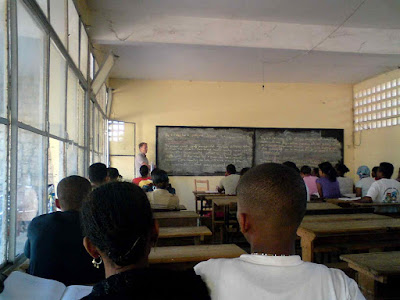
Birger had a different lecture the other day, as it wasn’t for our students at the University English Teaching Centre, but for law students following English classes. Solo, a colleague at the Centre, gave Birger the challenge of lecturing about the European Union to students with variable levels both in English and in law. Anyway, he did well and the students seemed to enjoy the challenge and the topic. They asked a lot of questions, from why Turkey is not in the EU to what’s the name of the Norwegian king (!?!?!) and how do you say hello and good bye in Norwegian. I guess it ended up being a quite exotic law/English lecture.
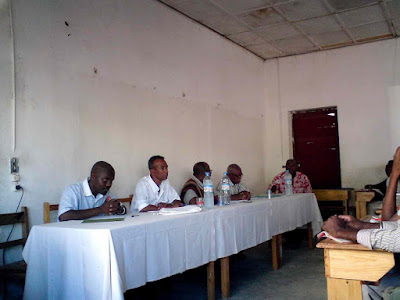
 After giving “our” students a challenging lecture on “academic writing”, we attended a very interesting seminar on “Republic and Democracy” at the University (on a Saturday afternoon). The event was organised by an association of Phd students, where one of our students William is a member. The topic was particularly interesting given the political events of the last months, in the country. Three professors briefly exposed some concepts concerning the topic of the seminar, and then an interesting debate took place. Questions and reflections went back and forth in the crowded room. Most of the reflections involved the Constitution, the challenge of building up a functioning democracy in a country with many illiterate voters, as well as the problem of corruption. The dean of the university did a brilliant job moderating the debate.
But the day had still a lot to give, after the debate we were invited to a reception that turned into a small party with the professors and the Phd students. Tongues loosened with the help of Malagasy rum and the never absent THB (Three Horses Beer). It is impressive to see how, despite the poor facilities that this city offers, people with strong desire get informed about what happens all over the world. From the Italian and Russian mafia, to the role of the former Belgian Prime Minister, to the feeling of belonging in Madagascar, we talked about several things in French, English and Malagasy… always in the Malagasy way: a sip of rum for the ancestors first, and a speech to wrap it up!
Birger had a different lecture the other day, as it wasn’t for our students at the University English Teaching Centre, but for law students following English classes. Solo, a colleague at the Centre, gave Birger the challenge of lecturing about the European Union to students with variable levels both in English and in law. Anyway, he did well and the students seemed to enjoy the challenge and the topic. They asked a lot of questions, from why Turkey is not in the EU to what’s the name of the Norwegian king (!?!?!) and how do you say hello and good bye in Norwegian. I guess it ended up being a quite exotic law/English lecture.
 After giving “our” students a challenging lecture on “academic writing”, we attended a very interesting seminar on “Republic and Democracy” at the University (on a Saturday afternoon). The event was organised by an association of Phd students, where one of our students William is a member. The topic was particularly interesting given the political events of the last months, in the country. Three professors briefly exposed some concepts concerning the topic of the seminar, and then an interesting debate took place. Questions and reflections went back and forth in the crowded room. Most of the reflections involved the Constitution, the challenge of building up a functioning democracy in a country with many illiterate voters, as well as the problem of corruption. The dean of the university did a brilliant job moderating the debate.

But the day had still a lot to give, after the debate we were invited to a reception that turned into a small party with the professors and the Phd students. Tongues loosened with the help of Malagasy rum and the never absent THB (Three Horses Beer). It is impressive to see how, despite the poor facilities that this city offers, people with strong desire get informed about what happens all over the world. From the Italian and Russian mafia, to the role of the former Belgian Prime Minister, to the feeling of belonging in Madagascar, we talked about several things in French, English and Malagasy… always in the Malagasy way: a sip of rum for the ancestors first, and a speech to wrap it up!

Wednesday, September 16, 2009
An update on the crisis in Madagascar
We, not to mention the Malagasy population, were hoping that the political crisis was going towards a solution. Three former Presidents and the acting president of the transition had two meetings in Maputo. It seemed like they had come to an agreement concerning a consensus transitional government, but I guess the agreement from the first meeting was just hiding their differences. During the second meeting, the four movements were not able to agree on the positions in the transitional government.
Some days after returning from Maputo, the ”de facto” president Andry Rajoelina, decided to ”implement” the agreement by creating his own new ”consensus” government. This decision seems to have two major consequences:
-The three other movements are now united against Rajoelina, something that 6 months back would have been nothing less than a miracle. These movements are led by a dubious bunch, three former presidents: Albert Zafy (impeached for corruption in 1996), Didier Ratisraka (the dictator given the boot by the people/Ravolomanana in 2002), Marc Ravalomanana (chased out of the country by ex-DJ Rajoelina, his followers and the military in 2009).
-The people in Tana seem to be reacting against Rajoelinas movement’s unilateralism and lack of democratic spirit. (All demonstrations have so far been suppressed). The “united” opposition has called for a big demonstration the 20th of September, and a large turnout is to be expected.
So far it seems like the demonstrations have been concentrated to Tana. We hope that they will be kept peaceful. However, if there is one thing we’ve learned from living here for almost a year: to predict what will happen when Malagasy politicians are calling the shots is close to impossible.
Thursday, June 11, 2009
Do we know the truth?
It sounds like a philosophical question, but I would just like to know if the news and information we get are complete and correct. Because the idea we have of the world we live in, comes from the information we can gather about it.
This consideration springs mostly from a “research accident”. The other day I was hunting for some information on the Internet. Typical Google search with key words, and an article published by the Malagasy Presidency (the site of the HAT, not Ravalomanana’s), caught my attention (in French: http://www.madagascar-presidency.gov.mg/actualite/index.php?shw=pourquoi).
It’s an interview between Jean-Luc Raharimanana a Malagasy writer and Colette Braeckman a Belgian journalist. It raises an interesting issue for me, so I decide to track down the journalist to ask her some more questions. By doing so I found the original version of the interview both on her blog (in French: http://blogs.lesoir.be/colette-braeckman/2009/03/16/madagascar-le-foncier-au-coeur-de-la-crise/) and on The Observer (in English: http://observers.france24.com/en/content/20090317-why-ravalomanana-out-step-down-army-madagascar-rajoelina). What did I discover? Well, that in the original article, the journalist was interviewing the writer, so the given answers are form a Malagasy person. While in the Presidency’s version it seems to be the opposite: the Belgian journalist seems to be the one giving the answers and not the one asking them!
This is a very important difference, as the article is quite harsh against the former President Ravalomanana, and the Presidency is giving the impression that this criticism comes from a foreign journalist. It is well known that the current government is lacking international approval, and is trying hard to give the opposite impression trough the media. Furthermore, and not surprisingly, the interview on the Presidency’s website is also lacking the last 5-6 lines, those saying that Andry Rajoelina in charge now, is not so different from the former President. So, now I know that if I want more answers on the topic relevant to my research, I probably have to contact Mr. Raharimanana instead of Colette Braeckman; but how many knows that?
You might think that this is mostly an African problem, but Italy is facing an attack to the freedom of the press (and the judiciary). And this is done through a decree and not a law, to avoid a longer and more rigorous process (in Italian: http://www.repubblica.it/2009/06/sezioni/politica/ddl-sicurezza-6/ddl-sicurezza-6/ddl-sicurezza-6.html).
That is why I’m worried and I ask again: do we know the truth? Can we at least access it if we want to?
Italiano: Sappiamo la verità?
Sembra una questione filosofica, ma quello che vorrei sapere è solo se le notizie e le informazioni che riceviamo sono complete e corrette. Perché l’idea che ci facciamo del mondo nel quale viviamo, scaturisce dalle informazioni che otteniamo su di esso.
Questa considerazione scaturisce da un “incidente di ricerca” avvenuto l’altro giorno. Faccio una tipica ricerca su Google con delle parole chiave, e un articolo pubblicato sul sito della Presidenza Malgascia (quella attuale, HAT, non quella di Ravalomanana), ha colto la mia attenzione (in francese: http://www.madagascar-presidency.gov.mg/actualite/index.php?shw=pourquoi). E’ un colloquio tra Jean-Luc Raharimanana, scrittore malgascio, e Colette Braeckman, giornalista belga.
Tratta di un argomento interessante per me, per cui ho deciso di rintracciare la giornalista per chiederle alcune informazioni in merito. Cercandola su internet, ho trovato la versione originale dell’intervista, sia sul suo blog (in francese: http://blogs.lesoir.be/colette-braeckman/2009/03/16/madagascar-le-foncier-au-coeur-de-la-crise/) , che sul sito de The Observer (in inglese: http://observers.france24.com/en/content/20090317-why-ravalomanana-out-step-down-army-madagascar-rajoelina). E cosa scopro? Be’, che nell’intervista originale la giornalista intervistava lo scrittore, quindi le risposte erano date da un malgascio. Mentre nella versione del sito della Presidenza, sembrava assolutamente il contrario: la giornalista belga sembra rispondere alle questioni e non porle!
Questa è una differenza molto importante, poiché l’articolo e’ molto critico nei confronti del Presidente uscente Ravalomanana, e la Presidenza dona l’impressione che queste critiche vengano da una giornalista straniera. E’ noto che il governo attuale risente della mancanza di approvazione sulla scena internazionale, e sta provando a dare l’impressione del contrario attraverso i media. Inoltre, non sorprende, sul sito della Presidenza mancano le ultime 5-6 righe dell’intervista; quelle che dicono che Andry Rajoelina, in carica adesso, non è poi cosi diverso dal presidente uscente. Quindi ora so che, se voglio più informazioni sull’argomento della mia ricerca, devo contattare Mr Raharimanana e non Colette Braeckman; ma quanti lo sanno?
Si potrebbe pensare che questo è un problema maggiormente africano, ma l’Italia sta subendo un attacco alla libertà di stampa (e della giustizia). Il tutto attraverso un decreto, e non una legge, per evitare un iter più lungo e rigoroso (in italiano: http://www.repubblica.it/2009/06/sezioni/politica/ddl-sicurezza-6/ddl-sicurezza-6/ddl-sicurezza-6.html)
Ecco perché sono preoccupata, e chiedo di nuovo: sappiamo la verità? Possiamo almeno arrivare ad essa se vogliamo?
Tuesday, April 21, 2009
More troubles
Again. Yes, unfortunately it is happening again.
Yesterday the pro-Ravalomanana were demonstrating. They met a strong repression by the army: 2 people died and many are injured. The Min. of defence declared on RFI that there was no shooting... but by hearing the registration of the protests and by looking at some photos, it seems very well the opposite.
NB Toliara is calm.
More info:
in english
http://news.bbc.co.uk/2/hi/africa/8008979.stm
in french
http://www.topmada.com/2009/04/20/repression-meurtriere-de-la-manifestation-des-legalistes-photos/
http://rfi.fr/actufr/articles/112/article_80329.asp
Italiano: Ancora. Sta succedendo di nuovo. Ieri i sostenitori di Ravalomanana stavano dimonstrando, fino a quando l'esercito ha sparato: 2 morti e diversi feriti. Il Min. della difesa ha dichiarato alla radio RFI che l'esercito non ha sparato... l'audio della protesta e le foto sembrano dimonstrare il contrario.
NB A Toliara tutto e' calmo.
Friday, April 17, 2009
What now?
Trying not to think of the tragedy in Abruzzo, I put my head down in the local newspapers... and I get into a different “tragedy”: the situation in Madagascar.
Some of you asked us for an update, well, here a brief one.
As you probably know, Ravalomanana had to flee the country (he went to Swaziland to plead his case to the SADC), and Rajoelina is now the president of HAT (the high transition authority), basically the President until new elections (2010? 2011?). Many countries and international organizations have condemned the new power, labelling it as unconstitutional and speaking of coup d’etat. Supporters of the now former President are protesting in the streets of Tana, but the new power repressed some of those protests, also trough military means. Maybe forgetting the freedom of speech and democracy values, they where shouting for just few weeks ago.
In Toliara everything is calm, too calm. Restaurants and hotels are semi deserted, and tourists are basically unseen. The economy of the country is uncertain as many of the international donors froze the flow of money due to the nature of the current government. Furthermore, with this instability in the country, who is going to invest money in Madagascar? Who is going to organize an exotic and relaxing travel here?
The HAT reduced the price of the oil in the market, the prices of transport in some areas, the prices of bread. The last one came out as flop: people noticed that the bread became also smaller; making it actually more expensive for big families (those buying 1 baguette for 300Ar, now need to buy 2 baguettes at 200Ar… so 400Ar). The newspapers report the flop, but only in their 5th or 6th page. The youngest head of state in the world is in the meanwhile touring the country, making promises, and offering Zebus. We actually catch a glimpse of him parading the streets of Toliara with people flocking around him.
Going on with the newspapers reading, we can even find news about Tiko. Do you remember Ravalomanana’s private empire? The one producing and distributing milk derivates, oil, etc? Well, after the looting of the retail Tiko stores, the factory was still functioning (but not delivering) in Antsirabe. I said “was” because few days ago the factory was looted too, apparently by the military troops of a new auto-proclaimed general. Since than, Tiko is publishing adds on newspapers, reporting the “unjust” actions of HAT. According to the new power, those actions are justified, as Ravalomanana hasn’t paid taxes in the last years. Probably true. Nevertheless the HAT hasn’t said what will happen to the 3.500 employee that worked at Tiko. Nor what will happen to those transporting their products. Nor what will happen to those selling products to Tiko (milk from Fifamanor, etc.). Nor what the stores will sell now, as Tiko had the monopoly of some products in the country.
We noticed that at the Toliara famous disco, girls under 18 are numerous, seeming less scared to get checked by the police. Another “old” rule enforced by Ravalomanana, a friend told me… while waiting to see if the HAT will enforce it too entrance seems free to everyone: a small sign of a more general anarchy in the air.
Ravalomanana is gone now, however he is announcing to come back soon. We again, wait to see what will happen…
Monday, March 16, 2009
A life in crises?

Crisis is a popular word these days. To mention a few, we are (in theory) affected by the global financial crisis, the global warming crisis, the socio-economic crisis and the political crisis in Madagascar. Affected by all these crises you should think that we live a quite tough life, but as our visitors from Norway could witness, our life is far from very tough. Except for an exceptional identity crisis or the more common “I have to run to the bathroom – crisis”, we are by no means in need of crisis management.
To say that we live a totally normal life these days is to exaggerate, since waking up to the sounds of grenades and gunshots is not a part of our daily routine. Neither is to wake up with police equipped with Kaleshnikovs and bulletproof vests, having a check point outside our house. However, a part from those incidents and the fact that we are very attentive to the news, our life is pretty normal. We have restarted our English teaching, and the students seemed very happy to have us back. Yesterday we had a conversation class, where the discussion of course was the political situation of Madagascar. Some of them are very well informed about what’s going on, others are relying on information they are getting from others. In a situation like this it is very interesting to hear all the rumors that go around, some of them quite spectacular.
The situation in the capital however, is reported to be critical. The opposition claims to control the army, and gave the president a deadline to leave his post. However, the president has made it clear that he will not do so, even after the opposition took control of prime minister’s office. So we are back to the same question we have been asking ourselves for the last two months: “What will happen next?” The president seems isolated, but how isolated is he, since he’s not leaving the presidential palace? Is the army really controlled by the opposition, or is it not that simple? We have given up on the guessing game, it’s just to wait and see…
The Americans are as usually having a bit more of a precautionary approach. The US Embassy has asked their citizens to consider leaving the country, and the substantial amount of American Peace Corps volunteers that are here, are according to our information being brought to South-Africa.
It was interesting to see the reactions of our students when we told them about the Americans leaving the country. We often get the feeling that many do not understand the gravity of the situation for the country. After a week as “tourists” we saw how difficult the situation is for the tourist business. We were basically alone in all hotels along the road between Antsirabe and Tulear. We saw businesses were people were laid off. In the magnificent National Parc Isalo, we were the only visitors that day. In Anakao, south of Tulear, three out of about 20 hotels bothered to be open. And of course, most likely, this is just the beginning…
In Tana there have been new rounds of looting just recently. The country has proved itself unable to protect private investments, making it impossible for foreign investors who used to see Madagascar as a country of opportunity. Tourists won’t come in big numbers for a long time. Another crisis is in the air…

Italiano: Una vita in crisi?
Crisi e’ una parola popolare di questi tempi. Per esempio siamo (in teoria) in piena crisi finaziaria globale, c’e’ la crisi per il cambiamento climatico, e la crisi socio-economica nonche’ politica in Madagascar... Con tutte queste crisi penserete che la nostra vita qui e’ abbastanza difficile. Invece, come hanno constatato i nostri ospiti norvegesi, il nostro quotidiano e’ lontano dall’essere complicato. Eccetto per le eccezionali crisi d’identita’: la piu’ comune “devo correre al bagno-crisi”, non abbiamo bisogno di una speciale unita’ di gestione della crisi.
In ogni caso, dire che abbiamo una vita totalmente normale in questi giorni, e’ esagerato, dato che svegliarsi al suono delle granate e colpi di fucile non e’ parte della nostra normale routine. Come non lo e’ svegliarsi e trovare la polizia armata di Kaleshnikovs e giubbotti antiproiettili per creare un posto di blocco davanti a casa nostra. In ogni caso, a parte questo tipo d’incidenti ed il fatto che siamo molto attenti alle notizie, la nostra vita e’ piuttosto normale. Abbiamo ricominciato con l’insegnamento dell’inglese, e gli studenti sono sembrati molto contenti di riaverci tra loro. Ieri facevamo conversazione in classe, e la discussione era naturalmente sulla crisi politica in Madagscar. Alcuni studenti sono molto ben informati su quello che accade, mente altri si basano piuttosto sui sentito dire. In situazioni come questa e’ molto interessante sentire tutte le voci che girano, alcune di queste sono alquanto spettacolari.
In ogni caso la situazione nella capitale appare critica. L’opposizione afferma di controllare l’esercito, e ha dato al presidente un ultimatum per lasciare l’incarico. Ciononostante, il presidente ha rifiutato di andarsene, pur sapendo che l’ufficio del primo ministro e’ ormai nelle mani dell’opposizione. Quindi torniamo a chiederci la stessa domanda che ci siamo chiesti negli ultimi due mesi: “cosa succedera’ adesso?” Il presidente sembra isolato, ma quanto e’ isolato dato che rifiuta di lasciare il palazzo presidenziale? L’opposizione controlla davvero l’esercito o ne controlla solo una parte? Abbiamo smesso il gioco del tirare a indovinare, aspettiamo per vedere...
Gli Amercani hanno come al solito in queste cose, un approccio piu’ cauto. L’Ambasciata americana ha chiesto ai suoi cittadini di lasciare il paese, ad esempio i numerosi volontari (peace corps) normalmente presenti qui, sono stati trasferiti in Sud Africa.
Vedere le reazioni dei nostri studenti alla notizia che della partena degli americani, e’ stato interessante. In quanto spesso ci sembra che molti qui non si rendano pienamente conto della gravita’ di quello che sta succedendo. Dopo una settimana da “turisti” con i nostri amici venuti a trovarci, abbiamo visto quanto e’ difficile la situazione per gli operatori turistici. Eravamo infatti praticamente soli nei vari hotels sulla strada tra Antsirabe e Toliara. Abbiamo visitato diversi posti dove il personale e’ in cassa integrazione (non pagato). Nel magnifico Parco Nazionale dell’Isalo eravamo gli unici turisti. Ad Anakao, sud di Toliara, solo tre dei circa 20 hotel, erano aperti. E naturlamente, molto probabilmente, questo e’ solo l’inizio...
In Tana recentemente ci sono stati dei nuovi furti di massa. Il Paese ha dimostrato di essere incapace di difendere gli investimenti dei privati, perdendo l’opportunita’ di attirare investimenti dagli stranieri che vedevano il Madagascar come un posto sicuro. Probabilmente i turisti non si faranno vedere per un bel po. Un altra crisi nell’aria...

Thursday, March 12, 2009
Madagascar: Waiting and uncertainty follows “Red Saturday”
from http://www.afrika.no/Detailed/18010.html
By Venusia Vinciguerra and Lucien David (photo) for www. afrika.no in Madagascar | 03.03.2009

The Tiko stores are the property of Madagascar's president Ravalomanana. Many of them were looted during the unrest (Photo: Lucien David)
Antsirabe (Madagascar - Venusia Vinciguerra) - Uncertainty is now the most common feeling for the people living in Madagascar. The population, as well as the expatriates in the country, appears exhausted from the constant feeling that something big will soon happen, but then nothing seems to really happen.
Andry Rajoelina, former major of Antananarivo, proclaimed himself new head of state, and attempted to create a parallel administration and install his ministers into position. He started his “orange revolution” after president Ravalomanana closed his TV channel, VIVA TV, due to the broadcasting of an interview with the former president, Didier Ratsiraka.
The young Rajoelina called for a general strike in Antananarivo on January 26th, a strike that turned into a mass looting in the capital. The main factories and retails stores of Tiko, the president’s company, were attacked, robbed and destroyed. In addition, his TV and radio channels where destroyed, together with the national TV and radio channels, leaving most of Madagascar without broadcasts. The mass pillaging went on, destroying the few well functioning malls of the city, and emptying many rice storages, owned by privates. leaving the impression that the looting was not driven only by political intentions, but also by desperation or by opportunism.
The same escalation was witnessed the day after in other cities, as Antsirabe, Fianarantsoa, Mahajanga and Toliara, where Tiko storages and stores as well as rice reserves were emptied and vandalized. Looting continued over night between Tuesday 27th and Wednesday 28th. Reportedly about 100 people died or got injured, mostly due to accidents connected to the pillaging, while the army remained mostly an observer of the happenings. In Toliara there was a broad and massive participation, entire families carried as many rice bags as they could handle: on bikes, rickshaws, carts or on their shoulders. Also children were involved, and some made themselves thieves for a bag of orange juice, or for parts of broken toys. BIANCO, an anticorruption agency financed partly by Norway, was also vandalized: computers were stolen and sold, documents were thoroughly burned (!), and even windows, toilets, cables and roof’s components disappeared. The looting left the city of Toliara with a feeling of Wild West in the air. Stores remained closed for some days; especially those run by Indo-Pakistanis, who fear the anger of the Malagasy people against their commercial supremacy. Some goods are now scarce in the city: milk and butter, which are produced and distributed only by Tiko, but also oil is hard to find. Many foresee an increase of rice prices, the main staple for Malagasy people, and market prices for vegetables and fruits rose already.
Some weeks passed in uncertainty and apparent calmness, until Saturday 7th of February. Samedi Rouge (Red Saturday), as it is called by the Malagasy press, witnessed the shooting against the demonstrators who crossed the “red line” in front of the presidential palace in Antananarivo, making 28 victims (including a reporter), and numerous injured. A video reconstruction of the shooting is now being sold on DVDs and publicly screened in several Malagasy towns.
Ravalomanana did not recognize Rajoelina as a counterpart for negotiations in the beginning, and discharged and replaced him from his post as mayor of the capital. Predictably Rajoelina did not accept this decision, and went on to designate another replacement, leaving the city with two unelected mayors.
Finally on February 23rd, negotiations between Mark Ravalomanana and Andry Rajoelina started, with the assistance of representatives from the Council of Christian Churches in Madagascar (FFKM). Three meetings between the two contenders increased the hope for a peaceful solution. However, the hope diminished when the president did not personally attend the 4th meeting. Predictably Rajoelina declared the end of negotiations, and did not show up to the next meeting. Also the archbishop of Antananarivo, Odon Razanakolona, one of the facilitators, quit the negotiations, as he saw no developments. As a result, demonstration restarted, leading to two other fatalities in Fianarantsoa. UN Secretary General Ban Ki-moon appointed the former foreign minister of Mali, Tiebilé Dramé, as facilitator, and asked the archbishop to rejoin the negotiations.
The consequences of this political instability are numerous. Among others, the crisis of the tourism market, with nearly 100% cancellations, and 50% workers sent home according to the FHORM (Fédération des hôteliers et restaurateurs de Madagascar), and the Malagasy National Tourism Office, who made an official declaration asking the parties to quickly find an agreement. Another immediate consequence is the delay of the start of the new university year, with even the risk of a year cancellation due to lack of security (L’express de Madagascar, 28.02.2009).
Many are tired of the president’s actions, denouncing him of focusing on his own interests over those of the population. At the same time, it is not clear if the young businessman and former DJ Rajoelina will be the answer. It seems like the ex-major will continue his efforts to remove the president; but after the last events in Antananarivo, his popularity seems uncertain. Many see in this situation a repetition of Ravalomanana’s struggle to take the power from Didier Ratsiraka in 2002. However, there is a core difference: in 2002 the two contenders where conflicting over a contested election, while Rajoelina’s current request is not related to any electoral event.
Finally, this contest involves two merinas (the ethnic group of the highlands), and might not seem a fair play to the coastal population, who would like to see their ethnicities well represented, maybe by a president.
Uncertainty spreads in Madagascar, people wait.
Friday, February 20, 2009
- What is going on?
First of all, things seem to be more and more back to normal for most people in Madagascar. However, there are at least two people that are not living a normal life these days. The two main characters in this "wanna be democratic and non-violent coup d'etat like situation" are not doing anything that we find normal, considering the situation. As soon as we feel that we understand some of the motivations behind their actions, they go out and do something unpredictable.
The self-proclaimed president/ex-mayor, yesterday finally achieved one of his main goals, to physically install his "ministers" in four of the ministries. If he achieved this because he asked wifes and children of militaries to go in front of his supporters, I don't know (he actually didn't show up himself). According to reports, the presence of young girls dressed in orange (Orange Revolution, like in Ukraine) with mini-skirt (tbc), where especially noticable in front of the protestors. As could be expected, the military forces were so stunned by this move that they let the croud enter the empty ministry buildings.
The first one to take office as a "Minister" was our old friend from our troubled visa days, mr. directeur de Cabinet (see earlier blogpost) in the Ministere de l'Interieure. But our promoted friend didn't really last long. After the "orange movement" had celebrated their victory during the evening, the Ministries were once again brought back into the control of the president, by the help of the army.
While all this is going on, the negotiations between the two parties are apparently making some progress. The situation is getting more and more confusing. There could be a solution tomorrow, but more likely 6 months is a better guess. The good thing is that the violent conflict doesn't seem to be escalating. If any of the parties is seeming to gain support, it's the president's. However, at the moment none of them seems to have a high standing among the people. And for what these two are doing to the country, I totally understand them.
Get over with it - and let the people live their normal life!
Monday, February 9, 2009
The conflict escalates in Antananarivo
As many of you probably have seen in the news, things have not at all calmed down in Madagascar. Saturday, after a big rally in the capital, the crouds decidided to storm the President's palace, with the result that the police started to fire shots into the croud...
Read more here: http://news.bbc.co.uk/2/hi/africa/7876543.stm
We were in fact on our way to the capital to meet our friends that were suppose to come to visit us from Europe, but after the dramatic event, they were forced to cancel/postpone.
We had a rather strange journey north from Tulear. Having a real malagasy experience with a Taxi Brousse that went "en panne" after 1 1/2 hours drive, leaving us on the side of the road for several hours until we were able to hitch a ride with a car that passed. We stopped in Antsirabe, which is 3 hours south of Tana. We are staying at my old school. It will be very interesting to see what happends the next days... The conflict will surely continue in Tana, and we fear that it will spread to other cities as well.
We'll keep you updated on the situation.
Friday, February 6, 2009
Waiting for what may or may not happen
More than one week has passed since we witnessed the looting from our safe balcony and windows in Tulear. It has been a strange week. As the true humans we are, our biggest worries were related to ourselves, and the question if our friends (Børre, Annelise and Jan) would be able to come as planned in February. After a week where good and bad news have been replacing each other, it seems however that the country is calming down. However, it still has two people saying they are presidents, and the capital has two mayors. So, yesterday we had the great news that we will have guests in a few days. We will have to travel the almost 1000 km to Tana to receive them. We hope for a nice calm trip back down to Tulear, stopping at National parks and in interesting villages, far away from demonstrations and politics.
The TV-stations don’t broadcast in Tulear at the moment, and now that we are actually interested in the President’s whereabouts. The few radio stations that broadcast from Madagascar either play music or talk in Malagasy. RFI (Radio France International) is our best news source, but it also reports from the rest of the world, (quite annoying actually!) and it not always very detailed on the situation. And …in good French manner it decided to go on strike for a day!
Our other source of news is the “jungle telegraph”, and these days it is very active. To understand what’s going on you have to talk to a lot of people, and of course they are not all telling the same things, so you have to try to deduct your own truth from all the different facts and rumours you hear. After the looting in Tulear many people, including us, were worried for the demonstration that was announced for Saturday. Since the stores owned by the not always popular Indo-Pakistani population were left untouched on Tuesday, many people feared that we would see a new day of looting. Over a dinner at our French neighbours the other day, different scenarios were discussed, and we even speculated on a possible evacuation. The next day it seemed totally ridiculous, since Saturday passed without major happenings, and we enjoyed a day by the pool in a calm city.
Now it seems that a new demonstration is planned every second day. We’re getting used to them, also because they go on quite peacefully.
We hope that a solution to this political deadlock can be peacefully achieved, as we think that Madagascar needs some stability.
Friday, January 30, 2009
NEWS from Toliara
The situation is calm now, we hope it will last.


Norsk tekst -Birger (testo Italiano in fondo -Venusia)
-De tar tilbake det presidenten har tatt fra dem
Vår gassiske venninne forklarer kanskje hva de tenker, de mange tusener som deltar i plyndringen og raseringen av presidentens bedrifter i Toliara, men det gir likevel ingen berettigelse til det vi har vært vitne til de siste dagene.
Selv om det er en konflikt mellom to politikere, president Marc Ravalomanana og ordføreren i Antananarivo, Andry Rajoelina som danner utgangspunktet for det vi har sett i Toliara og i resten av landet de siste dagene, er det lite som minner om en demokratisk manifestasjon i gatene. Det er dessverre ikke gatas parlament som berettiget viser sin misnøye presidenten, men en mer eller mindre uorganisert mobb som i frustrasjon og misnøye utnytter muligheten til å skaffe seg kortsiktig gevinst. For på lengre sikt er det denne fattigste delen av befolkningen som kommer til å lide mest for de siste dagers hendelser.
Tirsdag 27. januar, startet rolig i Toliara. Vi passerte lageret til TIKO, presidentens meieri. Det var 5-6 uniformerte og bevæpnede vakter utenfor. Det begynte å gå opp for oss at noe var på gang da vi la merke til at mange butikker og internettkafeer var stengte. Da vi kjørte forbi Toliaras eneste supermarked Magro, som også er eid av presidenten, var det til vår overraskelse bare de to sedvanlige uniformerte vaktene som lå henslengt foran bygningen. Vi fant en åpen internettkafé, og meldte hjem om fred og ingen fare i Toliara, selv om vi fikk en gryende følelse at noe var på gang. Vi brøt opp før vi hadde tenkt, og kom oss hjem.
Der kunne vi fra vinduer og balkonger se en horde som stimlet seg sammen. I følge ryktene var TIKO allerede tatt, plyndret og satt i brann. Nå beveget folkemengden seg oppover mot Magro, som ligger ca. 300 meter fra der vi bor. Folk i alle aldre; unge menn, barn, kvinner og eldre menn kom løpende smilende og leende nedover gata, med hendene fulle av TIKO produkter. Etter hvert begynte folk å bli mer oppfinnsomme, og tok i bruk handlevogner og pousse-pousser. Vi undret oss over de som fornøyde kom spaserende med én skarve juskartong i hånden –lite å gjøre seg til tyv for. Etter at alle varer var robbet begynte bygningsmaterialene å komme. Stolper, dører, tak, vegger, utelamper, plastikkorger og emballasje – alt som potensielt kunne ha noen verdi. Vi fikk også for første gang i livet se noen bære et toalett på hodet! Lurte også litt på hva den 10 år gamle jenten skulle med to dukkebein. Resten av kroppen hadde vel noen andre stukket av med.
Rundt lunsjtider roet det seg litt ned utenfor, og vi hadde et håp om at opprøret hadde lagt seg. Senere på ettermiddagen stimlet folk seg igjen sammen på gaten utenfor. Jeg må innrømme at jeg hadde en viss frykt for at de hadde bestemt seg for å ta vår bygning eller stamrestauranten på den andre siden. Det viste seg at lengre nedi gata var det et rislager, tilhørende en inder. De første rissekkene kom småløpende ut kl. 16.30 om ettermiddagen. Senere ble de kjørt ut etter alle kunstens regler. Hele familier bærte rissekkene sammen, sykler var et svært populært transportmiddel. Senere kom også mopeder, pousse-pousser, oksekjerrer fulle av ris. Det var tragikomisk å observere en grådig pousse-pousse trekker, som hadde forsynt seg med en rissekk for mye, slik at hele kjerren datt sammen. Kl. 9 dagen etter strømmet det fortsatt folk til lageret. Det føltes som om halve byen var innom rislageret i løpet av natten. Tallene varierer, men det mest forsiktige anslaget er på 10 tonn ris, og det er heller ikke det eneste lageret som er tømt.
På gaten utenfor kunne vi også observere en velkledd familie som kjøpte opp ris. Det sies at man kunne kjøpe en 50 kg rissekk på gata for 5000 Ariary. Mindre enn 1/10 del av vanlig pris. Det fremstår som fullstendig meningsløst å selge til den prisen. Når reservelagrene er tømt og når importørene er konkurs vil den velklede familien selge risen de har kjøpt opp for langt mer. Den fattige selgeren vil da ikke ha råd til ris…
Den indiske huseieren min kunne fortelle meg at indiske forretningsdrivende har betalt store summer til militæret for å få beskyttelse. En beskyttelse som totalt uteble, da horden angrep. Ifølge huseieren omkom 11 personer under tømmingen av rislageret. Sannsynligvis trampet i hjel. Vi var selv vitne til flere skadede som ble kjørt ut.
Jeg har stor forståelse for at ordensmakten viser forsiktighet med å bruke makt i slike situasjoner, men samtidig er det skremmende å se at staten overhodet ikke oppfyller sin viktigste oppgave - det å beskytte sine innbyggere mot overgrep. Hvordan skal utenlandske bedrifter kunne investere i et slikt klima?
Samtidig er det skremmende for den fremtidige politiske situasjonen på Madagaskar å registrere at presidenten ikke er i stand til å beskytte sine egne investeringer, selv i en situasjon der han hadde god tid til å forberede seg på et angrep. På samme måte er det trist å registrere at den flunkende nye norskfinansierte bygningen til antikorrupsjonsbyrået BIANCO i Toliara er fullstendig rasert. De splitter nye datamaskinene ble solgt på svartebørsen for 100 000 Ariary (ca 300 kr). Hva har BIANCO med presidenten å gjøre?
Det er mulig at det er et snev av sannhet i påstanden om at de bare tar tilbake det presidenten har tatt fra dem. Å kjøpe en privat luksusjet for skattebetalernes penger må oppleves veldig frustrerende for dem som må gå 40 km hver dag for å hente vann, og det kan vanskelig kategoriseres som en fornuftig bruk av skattebetalernes penger. Misnøyen mot presidenten er stor i Toliara, noe som folket uten tvil er i sin fulle rett til å gi uttrykk for gjennom fredelige demonstrasjoner. Inderen som fikk se sitt rislager tømt har likevel ingenting med presidenten å gjøre. Han hadde bare mye av det befolkningen har lite av, og som de dessverre om noen måneder vil ha enda mindre av.
_______________________
Che cosa succede in Madagascar? La distruzione di Toliara, e non solo.
Che cosa succede in Madagascar? Onestamente ce lo chiediamo anche noi, se lo chiedono un po’ tutti i vazaha. La ragazza che ci aiuta in casa ha detto: la gente si riprende quello che gli è stato preso dal presidente. Ma cerchiamo di andare con ordine.
Il presidente della repubblica Malgascia si chiama Marc Ravalomanana. E’ un imprenditore, proprietario della Tiko specializzata in prodotti caseari, ma anche proprietario di molte altre cose, tra cui una radio e il canale televisivo MBS. “Ravalo” è anche a volte chiamato “Berlusconi tropical”, per intenderci. Arrivato al potere attraverso una difficile elezione per spodestare Ratsiraka nel 2002, è stato riconfermato nel 2006. Siamo qui da troppo poco per comprendere e giudicare la politica locale attraverso i nostri valori universali, che poco tengono conto dei valori parziali della gente che deve sopravvivere alla giornata (come direbbe Busi), ma semplificando diciamo che il Presidente ha mostrato tanta voglia di fare, e ha fatto anche, ma ultimamente ha cominciato ad avere un po’ di atteggiamenti da “presidente africano”, nel senso negativo del regime. Ha chiuso una radio a Toliara, e sospeso un canale televisivo appartenente al giovane sindaco (Andry Rajoelina) della capitale Antananarivo, perché aveva trasmesso un’intervista all’ex presidente Ratsiraka. Infine, poche settimane fa, Ravalomanana ha acquistato un secondo aereo presidenziale, l’air force one (two!), costosissimo e lussuosissimo, non proprio in linea con lo standard di vita della maggior parte della popolazione malgascia.
Il sindaco di Rajoelina, opponente dichiarato del presidente, ha organizzato una manifestazione per l’inaugurazione della Place de la démocratie, nella capitale con una grande risposta di pubblico. Pochi giorni dopo, lunedì 26.01.09, il sindaco, ha chiamato la popolazione allo sciopero generale, con massiccia partecipazione nonostante il giorno feriale. La massa ha però saccheggiato gli studi di due canali televisivi (quello nazionale e quello del presidente), di una radio, e dei magazzini Magro, punti vendita riconducibili a Ravalomanana, mettendo poi fuoco a tutto. Ovviamente i canali televisivi sono oscurati da lunedì. Il giorno dopo, martedì qui a Toliara tutto sembrava tranquillo, anche se alcuni negozi erano chiusi e noi abbiamo faticato per trovare un internet point aperto, per dirvi che tutto andava bene. Invece intorno a mezzogiorno, la situazione precipita in altre città, tra cui Toliara (dove abitiamo noi), unica città a non aver riconfermato il presidente nelle ultime elezioni (e per questo alquanto ignorata dalla politica presidenziale).
A Toliara, però, il vandalismo, la distruzione e i saccheggi sembrano avere ben poco a che fare con la protesta politica, a nostro avviso. Dal nostro balcone abbiamo potuto osservare il flusso di persone, la massa che ha cominciato depredando Magro (a 300mt da casa nostra), e il magazzino della Tiko. Di questi non è rimasto davvero più nulla (vedi foto), e noi abbiamo visto grandi, bambini, donne passare prima con prodotti alimentari, e poi con porte, finestre, cavi, pezzi di tetto, wc, pezzi di roba rotta. Della gente si è fatta ladra per un litro di succo d’arancia, bevuto in strada sorridendo… Poi saccheggio e distruzione sono passati ai depositi di riso, di proprietà’ di privati (persone di origini indiane e pachistane, che qui in Madagascar controllano gran parte del commercio). Uno proprio vicino a casa nostra, dove il saccheggio è iniziato vero le 16.30 di martedì fino alle 11.00 del mattino di mercoledì. Ininterrottamente per tutta la notte. Ovviamente, la folla è difficile da governare, ci sono numerosi feriti e morti (anche bambini), schiacciati o feriti dai cavi scoperti, vetri ecc.: è difficile fare un conto preciso e le voci che girano, riportano numeri molto diversi (apparentemente 11 morti nel deposito vicino casa nostra). Ma l’atto che ci ha lasciato forse più attoniti è stato forse la distruzione dei nuovissimi uffici di BIANCO, una associazione contro la corruzione (quindi assolutamente al servizio della popolazione e che c’entra poco col presidente), finanziata dal governo norvegese. BIANCO, inaugurata da poco a Toliara, è stata depredata dei nuovissimi computer (rivenduti a 100.000 Ariari- 42 euro circa!!), ma anche di porte, finestre, tegole, cavi elettrici ecc. Mercoledì tutti i negozi sono rimasti chiusi, come anche le banche, e’ difficile (se non impossibile) comprare credito per i telefoni, benzina, medicinali, ecc.
Insomma, una distruzione che ci sembra avere poco della protesta politica e dell’atto simbolico; al contrario ci è sembrata pura follia, disperazione di alcuni, ignoranza di altri. Qualcuno di sicuro farà anche dei bei soldi rivendendo riso rubato o comprato a pochissimo ora, quando questo scarseggerà nei prossimi mesi, dato che le riserve sono state razziate. Noi ci domandiamo quale sarà la mossa di Ravalomanana, quale la mossa di Rajoelina. E ci auguriamo che l’evoluzione politica del paese avvenga in maniera democratica e non attraverso la forza.
Incrociamo le dita.
Subscribe to:
Posts (Atom)